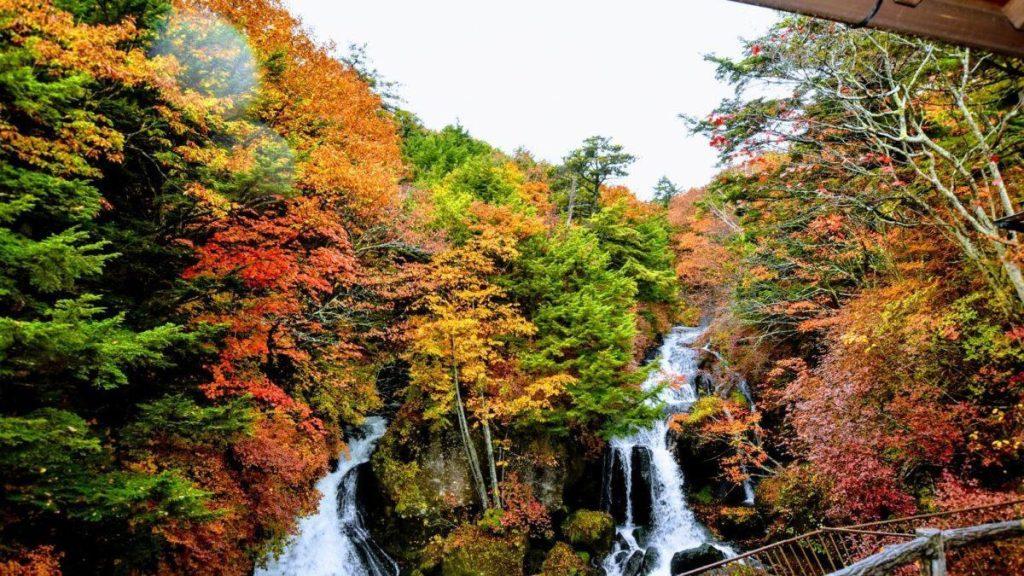
Tucked away in the mountains of Tochigi Prefecture, just two hours north of Tokyo, Nikko is a destination where Japan’s spiritual and natural beauty come together in perfect harmony. With its lavish shrines, moss-covered stone lanterns, whispering cedars, and pristine waterfalls, Nikko offers a glimpse into the soul of Japan — a land shaped by history, faith, and the power of nature.
This guide provides the perfect 2-day itinerary to efficiently explore Nikko’s UNESCO World Heritage Sites and its magnificent natural landscapes.
🏯 Nikko Toshogu Shrine – The Legacy of the Tokugawa Shogunate
At the heart of Nikko lies the magnificent Nikko Toshogu Shrine, a UNESCO World Heritage Site dedicated to Tokugawa Ieyasu, the powerful shogun who unified Japan and established over 250 years of peace during the Edo period.
Western audiences may recognize Ieyasu as the real-life model for the main character in the acclaimed Disney+ historical drama Shōgun. His legacy and vision for a stable, unified Japan live on here — this shrine serves as both his mausoleum and a spiritual symbol of the nation’s rebirth after centuries of war.
Built in the early 17th century by Ieyasu’s grandson, Tokugawa Iemitsu, Toshogu reflects both deep reverence and political symbolism. The project was immense—taking about 1 year and employing more than 15,000 artisans, carpenters, and craftsmen. Historians estimate the cost, in today’s terms, would equate to billions of US dollars, a reflection of the Tokugawa Shogunate’s immense wealth and their devotion to their founder [1].
Must-see highlights and their deeper meanings (Nikko Toshogu Shrine facts):
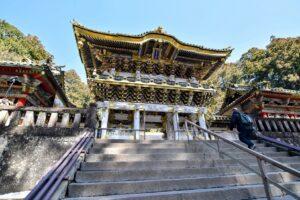
•Yomeimon Gate – known as the “Gate of the Sunlight,” dazzling with over 500 intricate carvings representing mythical creatures, sages, and nature’s balance.
•The Three Wise Monkeys (三猿) – Depicting the ancient proverb “See no evil, hear no evil, speak no evil.” This carving is believed to represent the stages of human development, specifically the teaching that children should be shielded from evil influences during their early years.
•The Sleeping Cat (Nemuri-neko) – Symbolizing peace, indicating that the shogun’s soul rests in harmony beneath it. One interpretation suggests it signifies that the country is so peaceful that even a cat can sleep soundly.
Beyond its ornate beauty, Toshogu represents both the spiritual heart of the Tokugawa dynasty and the enduring Japanese belief in balance between worldly achievement and divine protection.
⛩️ Futarasan Shrine – The Ancient Guardian of the Mountains
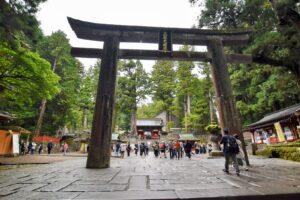
Long before Toshogu was built, Futarasan Shrine had already stood as Nikko’s sacred heart. Founded in the 8th century by the monk Shodo Shonin, this shrine venerates the deities of Mount Nantai, Mount Nyoho, and Mount Taro, the mountains that cradle Nikko itself.
Nearby stands the iconic Shinkyo Bridge, a vivid vermilion arch stretching gracefully across the Daiya River. Traditionally, only the highest-ranking monks and envoys were permitted to cross it; today, it marks the symbolic entrance to Nikko’s sacred world.
🪶 Kanmangafuchi Abyss – The Path of the Hundred Jizo
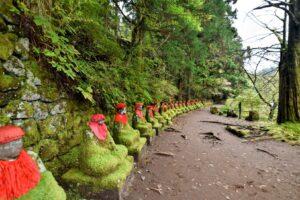
Just a short walk from central Nikko, the Kanmangafuchi Abyss offers a quieter, more contemplative experience. A riverside path lined with dozens of stone Jizo statues (protectors of travelers and children) creates an atmosphere of serene mystery.
Local legend says the statues “change in number” each time they are counted — a playful reminder of the forest’s spiritual presence. As the sound of the river mingles with birdsong, Kanmangafuchi invites visitors to slow down and feel Nikko’s gentle side.
🌲 Oku-Nikko – The Untamed Beauty Beyond the Shrines
For those who venture deeper into the mountains, Oku-Nikko (Inner Nikko) rewards travelers with some of Japan’s most breathtaking natural scenery. This highland area is filled with lakes, waterfalls, and walking trails surrounded by seasonal beauty.
Lake Chuzenji (中禅寺湖)
Formed by volcanic activity from Mount Nantai, this tranquil lake sits at an elevation of 1,269 meters. Visitors can enjoy scenic boat cruises, lakeside cafés, and mesmerizing autumn foliage reflected in the water.
Kegon Falls (華厳の滝) – Seasonal Highlights and Best Time to Visit (Kegon Falls Winter)
One of Japan’s three most famous waterfalls, Kegon Falls cascades 97 meters from Lake Chuzenji. Viewing platforms at different levels offer spectacular photo spots.
The most dramatic seasonal highlight is the Kegon Falls winter view, where the entire waterfall freezes into a massive “Icefall” (Hyōbaku), creating a stunning blue-white spectacle. This is one of Oku-Nikko’s winter highlights, and the best time to visit the viewing platform is early morning for the clearest views.
A vast plateau once said to be the “battlefield of the gods,” Senjogahara today is a haven for hikers and birdwatchers.
[Beginner Hiking Information]
•Recommended Route: Akanuma to Yudaki Falls (approx. 3 hours)
•Difficulty: Low (The trail is well-maintained with wooden boardwalks, making it easy to walk).
•Gear: Comfortable clothing and walking shoes (sneakers are fine) are sufficient year-round.
Ryuzu Falls (龍頭の滝) & Yudaki Falls (湯滝)
Named for its dragon-
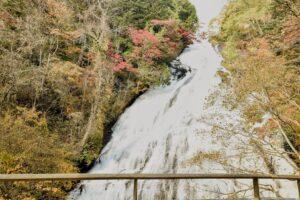
shaped flow, Ryuzu Falls is particularly stunning in autumn. Yudaki Falls, which spills from Lake Yunoko, offers a more powerful spectacle and marks the start of scenic hiking trails through the forest.
🍁 Autumn Foliage (Koyo) in Nikko
Nikko is one of Japan’s premier destinations for autumn leaves. The colors begin in the higher elevations of Oku-Nikko and gradually descend to the town area.
•Oku-Nikko (Lake Chuzenji, Senjogahara):Best time is mid to late October. The Irohazaka Winding Road is particularly stunning, but expect heavy traffic.
•Nikko Town (Toshogu, Shinkyo Bridge):Best time is early to mid-November. The cedar forests around the shrines offer a beautiful contrast with the changing leaves.
❄️ Winter Snow and Ice
While colder, winter offers a unique, tranquil beauty.
•Kegon Falls Icefall (Hyōbaku):Late January to late February is the best time to see the falls partially or fully frozen. The viewing platform remains open.
•Toshogu Shrine in Snow: The contrast of the vibrant shrine buildings against a blanket of snow is breathtaking and offers a less crowded experience.
🗓️ Suggested 2-Day Nikko Itinerary: Culture and Nature
This itinerary is designed to efficiently cover Nikko’s main attractions.
🗓️ Option 1: Nikko Day Trip (World Heritage Focus)
This itinerary is perfect for travelers based in Tokyo who want to experience the main UNESCO sites without an overnight stay.
Time
Activity
Notes
7:00 AM
Depart from Tokyo (Asakusa or Shinjuku)
Use the Tobu Limited Express for the fastest, direct route.
9:00 AM
Arrive at Tobu-Nikko Station
Take the World Heritage Bus to the Shinkyo Bridge area.
9:30 AM
Shinkyo Bridge & Futarasan Shrine
Start with the symbolic entrance and the ancient mountain shrine.
11:00 AM
Nikko Toshogu Shrine
Allocate the most time here to fully appreciate the detail and history.
1:00 PM
Lunch (Yuba Cuisine)
Enjoy a local specialty near the shrine area.
2:30 PM
Rinnoji Temple (Sanbutsudo)
Visit the main temple of Nikko.
4:00 PM
Return to Tobu-Nikko Station
Purchase souvenirs and snacks.
5:00 PM
Depart for Tokyo
7:00 PM
Arrive in Tokyo
🗓️ Option 2: Nikko Nature Focus (Oku-Nikko Day Trip)
For visitors who have already seen the shrines or prefer natural landscapes, this focuses on the stunning Oku-Nikko area.
Time
Activity
Notes
7:30 AM
Depart from Tokyo
9:30 AM
Arrive at Tobu-Nikko Station
Take the bus directly to Lake Chuzenji/Kegon Falls.
11:00 AM
Kegon Falls & Lake Chuzenji
Take the elevator down to the base of the falls for the best view.
1:00 PM
Lunch near Lake Chuzenji
Try a local trout dish.
2:30 PM
Senjogahara Marshland Hike
Enjoy the easy, scenic boardwalk trail (e.g., Akanuma to Yudaki Falls).
4:30 PM
Ryuzu Falls
A quick stop to see the “Dragon Head” waterfall.
5:30 PM
Depart for Tobu-Nikko Station
8:00 PM
Arrive in Tokyo
🚆 How to Get to Nikko from Tokyo: Access Comparison
There are two main options for accessing Nikko from Tokyo: JR and Tobu Railway.
Transportation
Route
Duration
Estimated Cost
Convenience
Tobu Limited Express “Kegon”
Asakusa Station ⇔ Tobu-Nikko Station (Direct)
Approx. 2 hours
Approx. ¥3,000
Fastest, no transfers. Tobu offers special passes for Nikko tourism.
🍱 Local Flavors and Experiences: Yuba and Onsen, and Accomodation.
Enhance your Nikko trip with local flavors and experiences.
Nikko’s Shojin Ryori: Yuba (Tofu Skin)
Nikko, a historic center for mountain asceticism, is famous for its Yuba (tofu skin), a key ingredient in shojin ryori (Buddhist vegetarian cuisine). Unlike Kyoto’s yuba, Nikko’s yuba is traditionally pulled up in a double layer, giving it a thicker, more substantial texture.
•Yuba Restaurants: Numerous established restaurants near Tobu-Nikko Station offer yuba sashimi, simmered yuba, and yuba-don (rice bowl). Lunchtime can be crowded, so early arrival or a reservation is recommended.
•Street Food: Along the path to Toshogu, you can find vendors selling fried yuba or yuba on a stick for a quick snack.
Relax in an Onsen (Hot Spring)
Yumoto Onsen in Oku-Nikko and Kinugawa Onsen nearby are known for their high-quality hot springs.
•Oku-Nikko Yumoto Onsen: A quiet hot spring village with a long history, featuring cloudy, sulfurous waters.
•Kinugawa Onsen: Known for its large hotels and riverside open-air baths with beautiful gorge views.
Our partner ryokans offer private onsen experiences and traditional kaiseki dinners.
🏨 Accommodation by Area
Area
Vibe & Focus
Accommodation Type
Nikko Town (Near Station)
Convenience, easy access to shrines and transport.
Business hotels, budget guesthouses, and modern ryokans.
Lake Chuzenji / Oku-Nikko
Nature, tranquility, hiking, and lake views.
Resort hotels, traditional ryokans, and quiet guesthouses.
Kinugawa Onsen
Hot springs, relaxation, and large-scale resort experience.
Large onsen hotels with full-service amenities.
Recommendation: For a traditional Japanese experience, consider staying at a ryokan in Kinugawa Onsen or Yumoto Onsen to enjoy the local hot springs and kaiseki (traditional multi-course) dinner.
🌸 Final Thoughts – Where History and Nature Breathe as One
Nikko is more than a sightseeing spot — it’s a living harmony between Japan’s spiritual past and its untamed natural world. From the golden gates of Toshogu to the whispering trees of Kanmangafuchi, every corner of Nikko tells a story of reverence and renewal.
“In Nikko, the mountains remember, the rivers speak, and the spirits of Japan’s history still walk among the cedars.”
Whether you come for the history, the legends, or the landscapes, one thing is certain — you’ll leave Nikko with a deeper understanding of Japan itself.
Feel free to give us a heads-up by email at email address or using the below contact form. *You regarded to accept the condition that the message is going to reuse for audience without personal information.