Unveil the Secret History of Japan’s Ancient Capital
Are the roots of Kyoto, the heart of Japanese tradition, hidden in the sands of the Middle East?
Step beyond the well-trodden paths of temples and geisha districts. This is not a typical sightseeing tour. This is an intellectual adventure into the captivating theory that the founders of ancient Kyoto—the powerful Hata Clan—were descendants of the Lost Ten Tribes of Israel who journeyed along the Silk Road.
Join our exclusive small-group tour to explore the profound connections between Shinto, ancient Israelite practices, and the mysterious origins of Japan’s most sacred city.
Tour Overview: The Uzumasa Enigma
Feature | Detail |
Theme | The Hata Clan, Ancient Israel, and the Foundations of Kyoto |
Duration | Approximately 4 Hours |
Group Size | Exclusive Small Group (Max. 10 Guests) |
Start/End | Convenient Pickup and Drop-off at Your Kyoto City Hotel |
Focus | Deep historical and cultural exploration, not just sightseeing |
This tour is specially designed for history enthusiasts, cultural explorers, and those interested in the Japanese-Jewish Common Ancestor Theory (Nichiyu Dōsoron). We offer a unique, intimate experience that larger tours simply cannot provide.
The Journey: Tracing the Footsteps of the Hata Clan
Our 4-hour course focuses on the Uzumasa district and its surrounding areas, the ancient power base of the Hata Clan, whose engineering genius made the construction of Heian-kyo (Kyoto) possible.
Stop 1: Matsunoo-taisha Shrine (The Guardian of the Hata Clan)
We begin at Matsunoo-taisha, one of Kyoto’s oldest shrines and the primary sanctuary of the Hata Clan. This site is a testament to the clan’s mastery of water control and fermentation technology. We will discuss the shrine’s role as the guardian of the Hata Clan’s deity and its connection to sake brewing, a skill the Hata are credited with introducing. Furthermore, we will explore the ancient Iwakura (sacred rock) on the mountain behind the shrine, linking the site to the deep-rooted continental traditions of mountain and stone worship.
Stop 2: Koryu-ji Temple (The Clan Temple & Silk Road Connection)
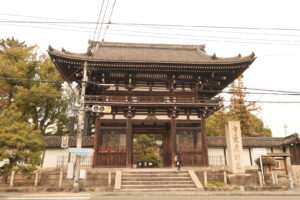 Next, we visit Koryu-ji Temple, the Hata Clan’s family temple. Here, we will examine the famous Miroku Bosatsu (Maitreya Bodhisattva), whose serene “Archaic Smile” is said to trace its artistic lineage back to Hellenistic Greek sculpture, a testament to the Silk Road’s cultural reach. We will discuss the temple’s original name, Daisen-ji, which some scholars link to the “Great Qin” (Daqin), the Chinese name for the Roman Empire and, by extension, Nestorian Christianity (Keikyo).
Stop 3: Kijima Shrine (The Three-Pillar Torii)
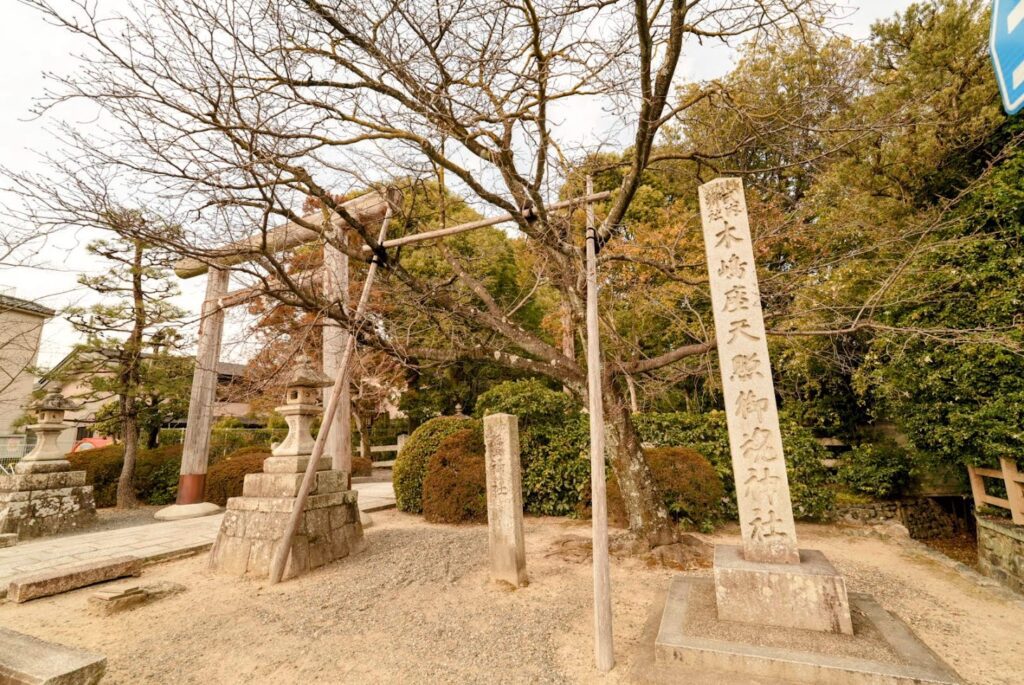
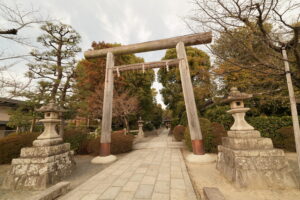 A short, reflective walk brings us to Kijima Shrine, also known as the Konoshima-jinja or Kaiko-no-Yashiro (Shrine of Silkworms). The highlight is the extremely rare Mitsu-bashira Torii (Three-Pillar Gate). This triangular structure is a powerful symbol, which many believe represents the Christian Trinity (Father, Son, and Holy Spirit), suggesting the site was a sacred place for ancient Nestorian Christians. We will also explore the significance of the Mototadasu Pond and the Hata Clan’s mastery of sericulture.
Stop 4: Oosake Shrine (The King David Connection)
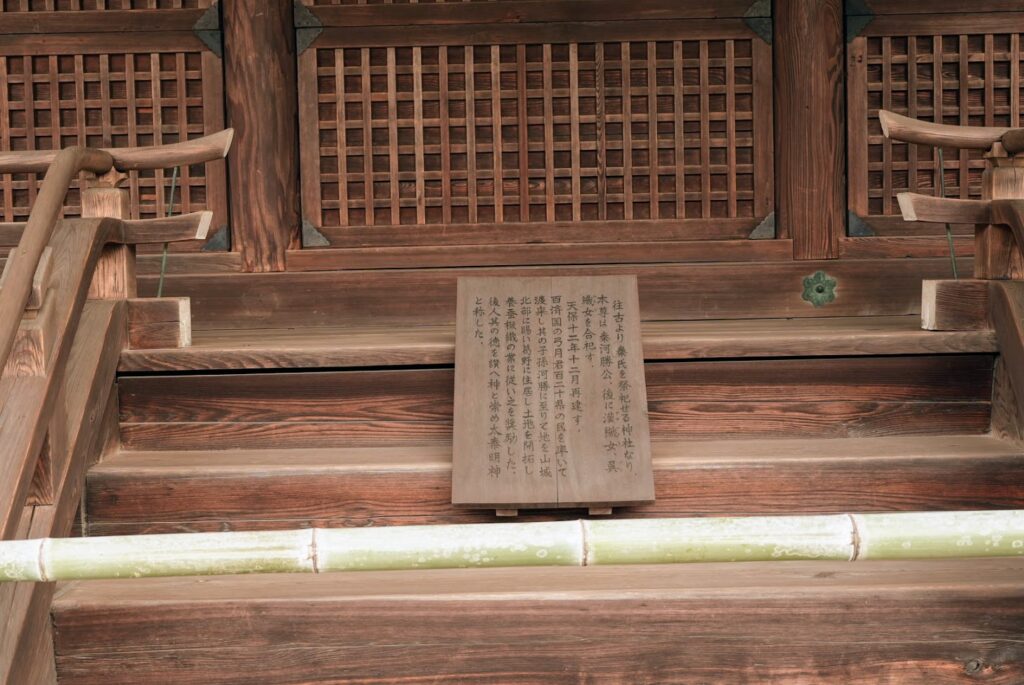
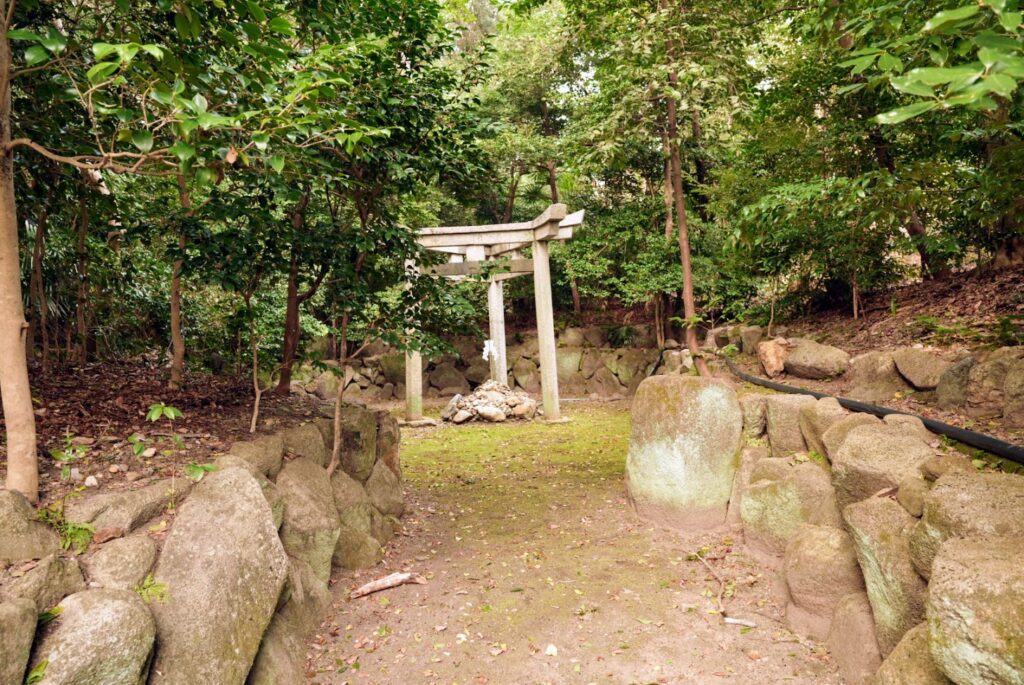
Our final stop is the secluded Oosake Shrine. Here, we delve into the most intriguing linguistic connections. We will discuss the theory that the shrine’s name, Oosake, was originally written with characters meaning “Great David” (Dabi), suggesting a possible dedication to the biblical King David, an ancestor of the Lost Tribes. This quiet, hidden spot offers a moment to reflect on the profound, global scope of this historical mystery.
Conclusion: Uzumasa – The Hebrew Echo
As we walk through the streets of Uzumasa, we will consider the striking theory that the name Uzumasa itself is a transliteration of the Hebrew phrase “Uz Mashiach” (Strength of the Messiah) or “Uz Massa” (Strong Journey).
Why Choose This Exclusive Tour?
•Expert Guidance: Led by a guide passionate about the Hata Clan and the Japanese-Jewish Common Ancestor Theory.
•Intimate Experience: Limited to 10 guests for a personal, in-depth discussion and easy navigation of the sites.
•Convenience: Door-to-door service from your Kyoto hotel ensures a seamless, stress-free experience.
•Beyond the Surface: Gain a perspective on Kyoto’s history that few tourists ever discover.
Book your passage into the ancient mystery of Kyoto today and see the city through a completely new lens.
Note: This tour explores historical and cultural theories, including the Japanese-Jewish Common Ancestor Theory, which is a subject of ongoing academic and popular discussion. We present these theories for their cultural and historical significance.